Hedge Trimming Stockwell: Recycling and Sustainability Commitments
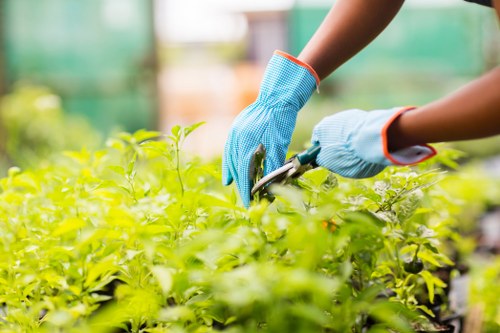 Hedge Trimming Stockwell is committed to creating an eco-friendly waste disposal area and a long-term, sustainable rubbish gardening area for the local community. Our approach to Stockwell hedge maintenance blends practical garden care with rigorous waste diversion: from separating green waste at source to ensuring that woody cuttings are processed, reused or transferred to approved facilities. This page explains our targets, partnerships and the steps we take to minimise landfill and carbon emissions while delivering hedge and boundary upkeep across Stockwell.
We treat every hedge job as an opportunity to improve local recycling outcomes. By using clearly labelled sacks, segregated tubs and compacting tools when on-site, our teams reduce cross-contamination of materials. Eco hedge trimming Stockwell means ensuring that branches destined for mulching, composting or biomass are not mixed with general waste. Our field staff follow the borough guidelines for kerbside separation and add an on-site layer of separation to feed existing municipal systems more effectively.

Recycling percentage target
Our measurable aim is to achieve a 70% recycling and reuse rate for all materials arising from hedge and small garden clearance operations in Stockwell by 2030. That target covers green waste, timber suitable for chipping, recyclable plastics and metals from fencing or fixtures, and any salvageable stone or brick. We report progress internally and work with local waste transfer stations to ensure our tonnage is tracked and credited toward the wider borough recycling figures.To reach that recycling percentage target we rely on organised logistics and local infrastructure.
Local transfer stations and material flows
We make frequent use of nearby transfer stations in Lambeth and neighbouring boroughs—routing green waste to composting and chipping facilities and delivering reusable materials to processing hubs. By choosing the right transfer station for each type of material (garden organics to composting facilities, clean wood to biomass processors, mixed recyclables to designated MRFs) we reduce haul distances and processing delays. Partnerships with charities and social enterprises are central to our sustainable model. We partner with local community gardens, reuse centres and charitable organisations to redirect usable items: shrubs and potted plants that can be replanted in community spaces, wooden sleepers or fencing repurposed by social enterprises, and bags of high-quality leaf mulch donated to school grounds and allotments. These links ensure that as much material as possible is given a second life rather than being sent for disposal.
We also coordinate charity pick-ups for salvageable materials and co-create seasonal initiatives: bulk wood donations for community workshops; garden waste diverted to urban farms; and mulch deliveries to neighbourhood green projects. This networked approach amplifies the impact of each hedge trimming visit and aligns our operations with the borough’s waste separation policy—separating dry recyclables, food and garden organics, and residual waste at the point of collection.
Practical steps on every job include:
- On-site separation of green arisings, clean timber and mixed recyclables
- Use of designated sacks and tubs aligned with the borough’s collection streams
- Sorting bulky items that can be salvaged for reuse or donated to charities
Transport choices matter. Low-carbon vans are a visible part of our sustainable rubbish gardening area strategy: our fleet includes electric vans for short urban runs and hybrid vehicles for longer routes, reducing idling and emissions in residential streets. Vehicles are routed to minimise mileage and avoid unnecessary transfers; where possible we use cargo bikes or small electric trailers for tight Stockwell roads, further reducing diesel consumption and noise.
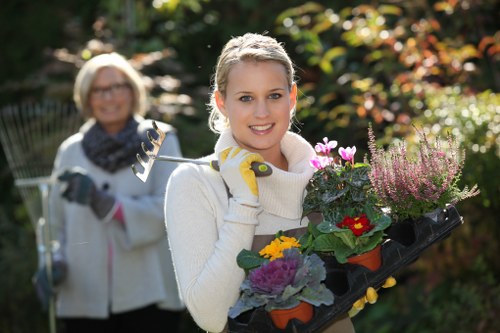 Composting and mulching practices form a core pillar of how we handle hedge arisings. Chipped wood and leaves are processed into mulch or hot compost depending on quality. High-quality mulch gets reused on projects across Stockwell—retaining soil moisture, suppressing weeds and sequestering carbon in the landscape. Lower-grade material is sent to municipal composting sites where it contributes to commercial soil improvers rather than going to landfill.
 Community engagement is woven into our sustainability policy. We provide clear pre-job briefings to residents on what will be recycled and what can be donated, and we run seasonal community planting days to put recycled materials back into local green spaces. Our Stockwell hedge trimming crews wear high-visibility kit and carry information cards that explain the local borough approach to waste separation so neighbours understand how their green waste is being handled.
We continually audit our waste streams to ensure transparency and improvement. Records include weights and destinations for green waste, wood, and recyclables, plus the number of donations made to charities and community groups. This data helps us refine the sustainable rubbish gardening area model and demonstrate progress toward our 70% recycling target, creating a replicable template for other urban hedge maintenance services.
In summary, our integrated approach to hedge care — from on-site separation to partnership-driven reuse and a low-emission vehicle fleet — supports a resilient eco-friendly waste disposal area in Stockwell. Hedge maintenance Stockwell can be both beautiful and sustainable: we aim to leave hedgerows tidy, neighbourhoods cleaner and the borough’s circular economy stronger.